Their story, in their words…
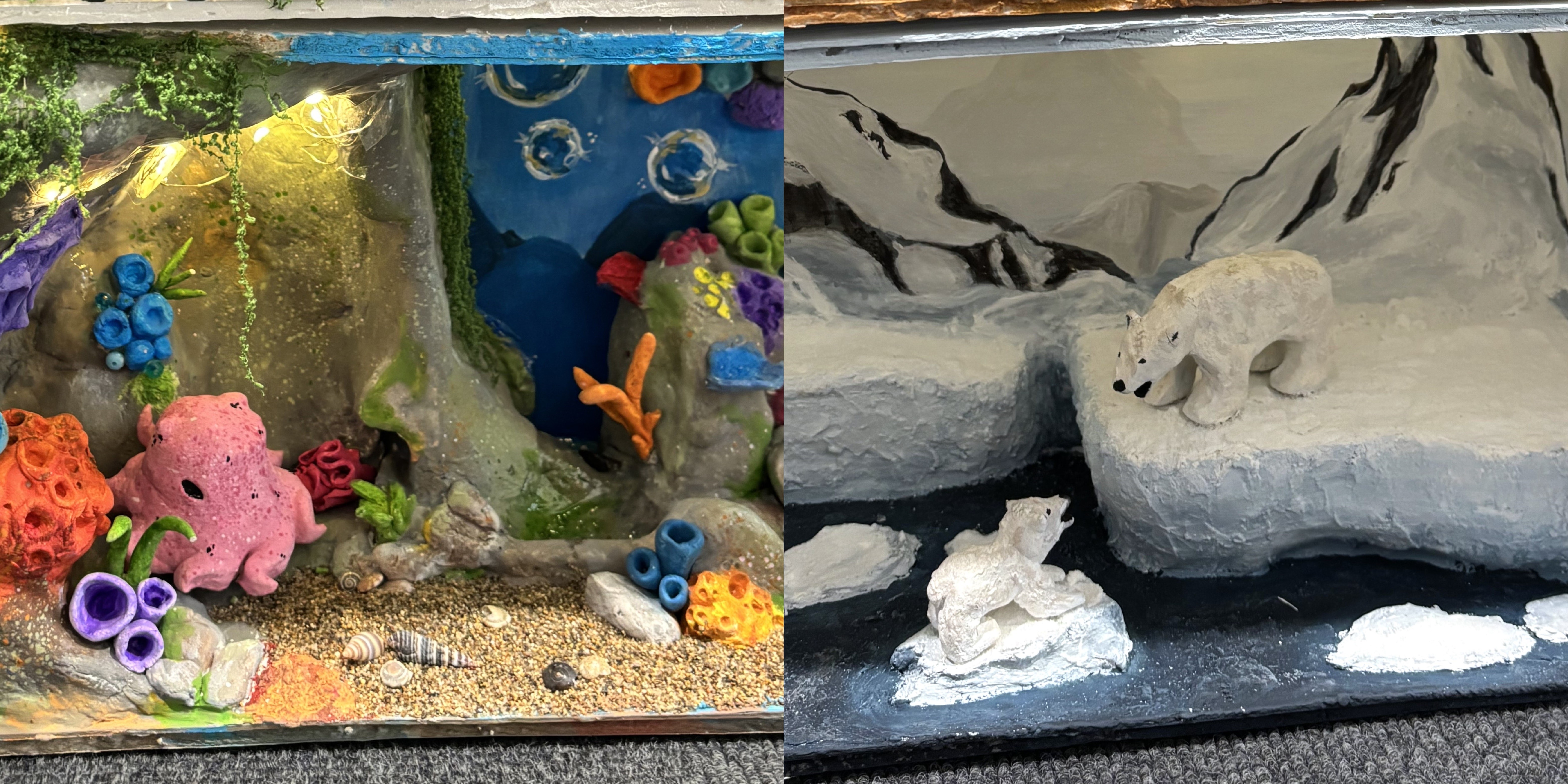
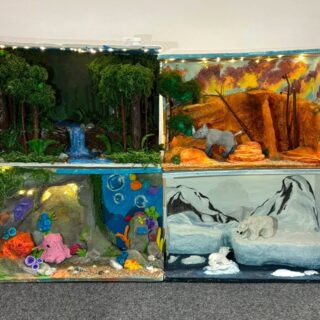
Over the summer we made a 4-habitat sculpture project using familiar techniques learnt from our studies with unfamiliar materials. The four habitats were savannah, ocean, tundra and rainforest with each one having at least one animal/plant inhabitant that is currently endangered.
After buying all the supplies together, we faced the challenge of creating a cohesive structure despite not being together for a long enough time during summer. Working around exams and holidays, we had to precisely explain our vision and communicate dimensions of the foamboard structure to be able to create the outer structure. Once we had the outer structure we each worked on our own habitats using clay, paper mache, glue and paint to create an environment. We then all met up to take pictures and put the sculpture together.
It was frustrating when we faced issues like wood unavailability despite travelling to three stores, or issues with structural strength and too much weight causing one member to have to substitute clay for foil and paper mache. However, it has also been fun creating the base structures and figuring out how to solve challenges like weight and the size of the terrain within the limited spaces.
Working with the resin needed to emulate water required a lot of trial and error. As we used air-dry resin, it required a 2:1 ratio which was difficult to measure, hence leading to many failures of the volume of resin shrinking, yet despite the obstacles, it eventually solidified successfully.
We have gotten experience on how to improvise with trial and error but still create something we planned and envisioned, whilst developing communication skills. Using resin for the first time was frustrating and required multiple attempts to get the ratio correctly. We also had to research endangered species, and along the way learnt about why they were endangered. Having to reuse materials gave insight into how wasteful we are as humans and what we could be doing to not let these non-biodegradable objects end up in landfills and the ocean.