Their story, in their words…..
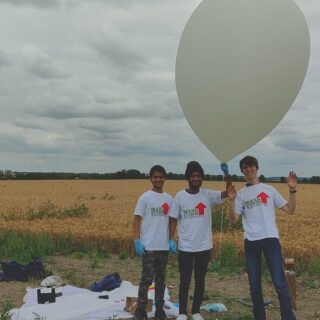
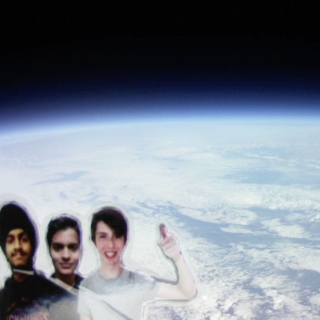
For our Mark Evison Award project, we sent a helium-filled weather balloon attached to a payload containing a camera approximately 31km into the stratosphere. We recorded the entire journey and pictured on the right is some of the footage we were able to capture.
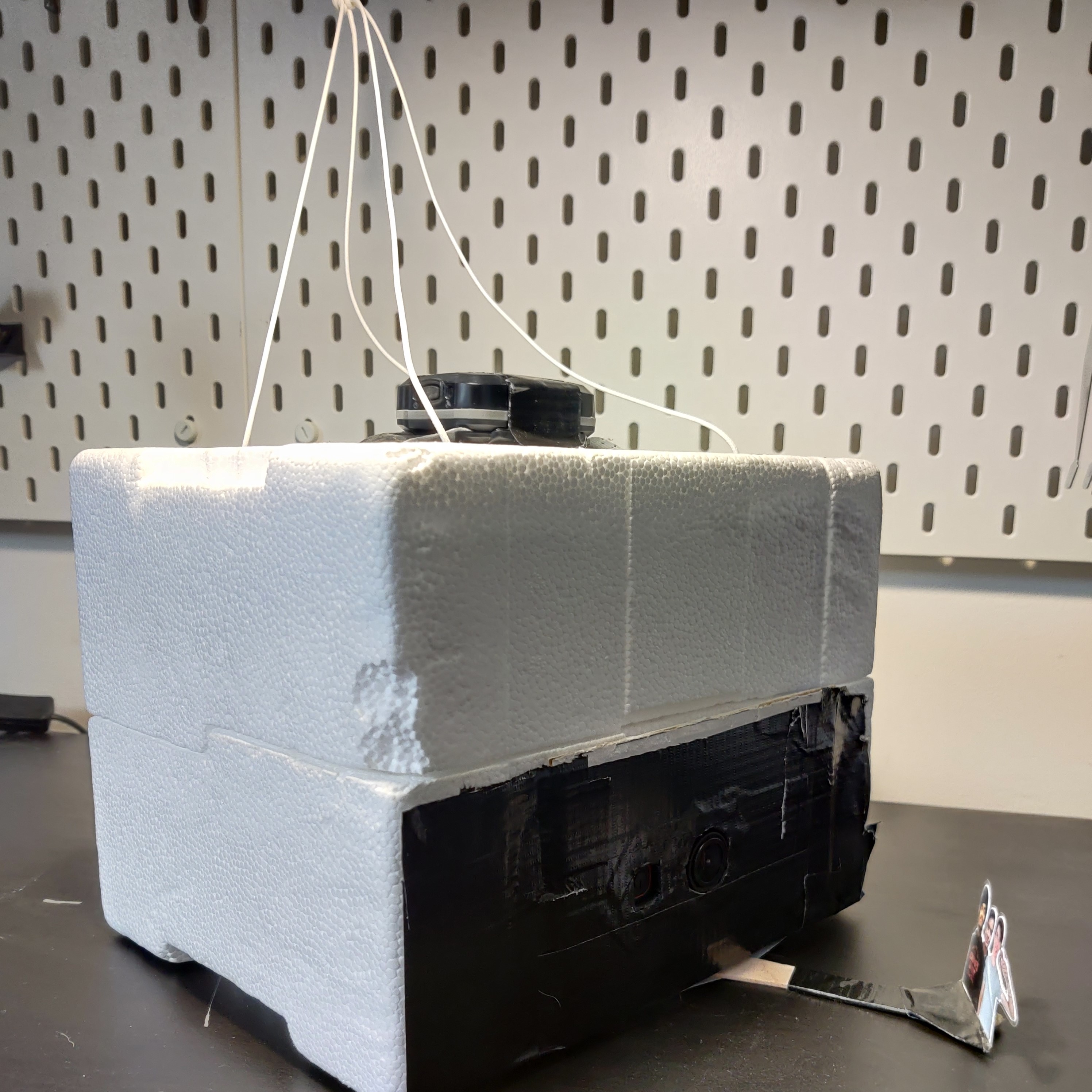
As you go higher, the atmospheric pressure goes down so a helium-filled balloon will rise until it eventually bursts because the internal gas expands outwards. To send a camera to near space, we used this principle and used a latex weather balloon that could rise to near space before it bursts. We used a small action camera inside a polystyrene box for insulation connected to a parachute that would deploy once the balloon bursts. To create the illusion that we were in space, we attached a small image of ourselves to the front of the payload so that it was in the camera frame for the duration of the flight.
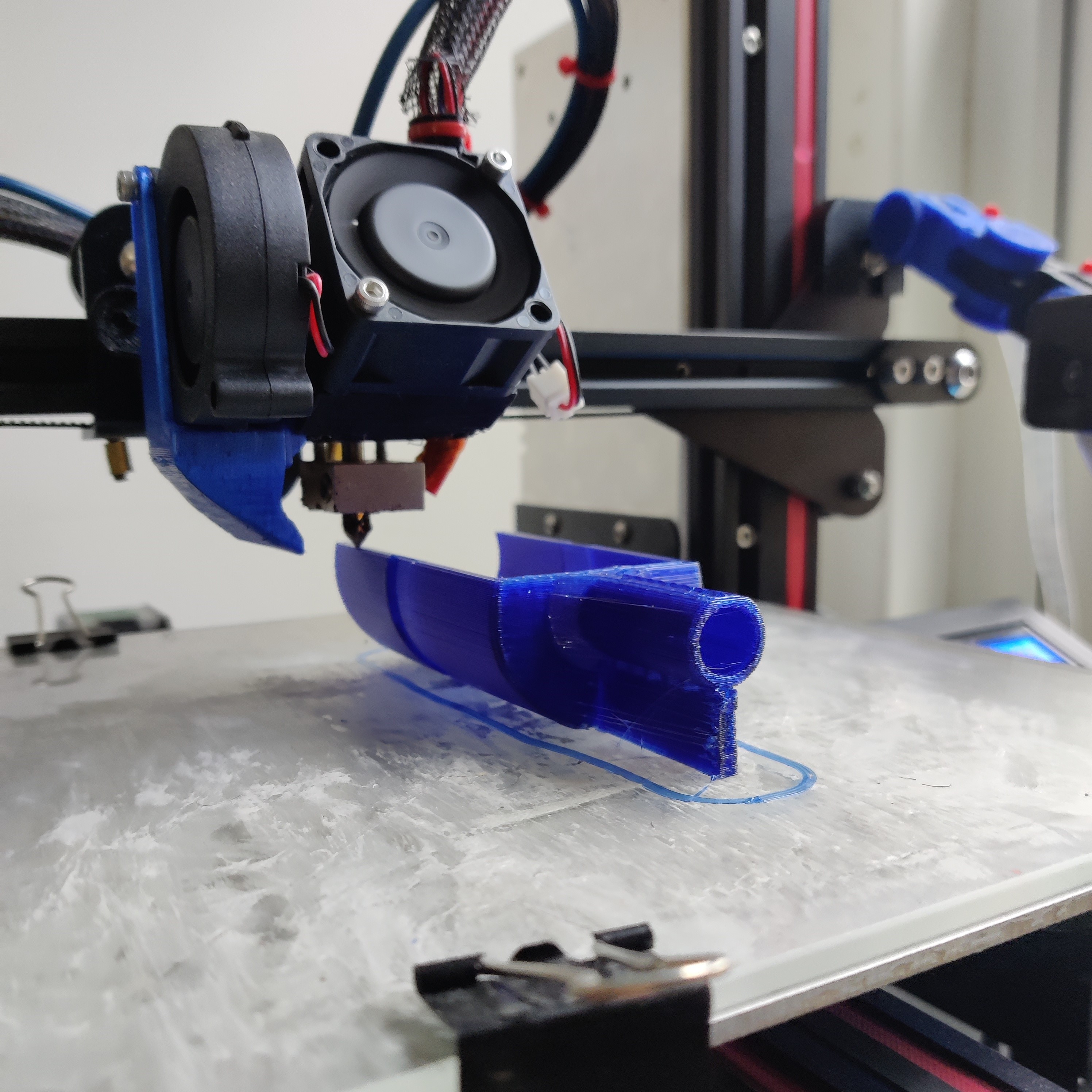
Our project took a lot of planning and preparation as we only had one shot at launching the balloon successfully. For example, we had to choose a launch site in an area that did not interfere with controlled airspace and get permission from the Civil Aviation Authority to launch. Also, the stratosphere can get as cold as -40°C so all our components had to be robust enough to withstand these harsh conditions. We also had to make our own DIY filling tube to connect the balloon neck to the helium canister and one of our team members, Richard, used his 3D printer to create a custom filling end for our specific latex balloon.
By far the greatest challenge was travel. Balloons travelling to such high altitudes will often fly very far away from their launch site and when we used online flight path predictors, it was not uncommon to see our payload predicted to travel over 150km. So that we could track the balloon’s live location, we used a satellite GPS for its reliability. Once it was launched, we chased the balloon by car, and it ended up travelling 72km east of our launch site. However, it took us about 4 hours to complete this journey because we were following the balloon live whilst it was still moving. Luckily, we were easily able to recover the balloon because it landed in a farmers field a few meters away from a public footpath and the payload sustained no damage.
We had an amazing experience launching the balloon but there are some things we would do differently if we were to do it again. Our payload swayed and rotated around a lot in the wind and to counter this, we would add wings to increase its stability. We had a very limited window to launch because of our various commitments so we had to launch on a cloudy day. If it was a clear day, then our view of the ground would have looked better. Overall, we are really happy with the success of our project, and we would like to thank the Mark Evison Foundation for making this possible!