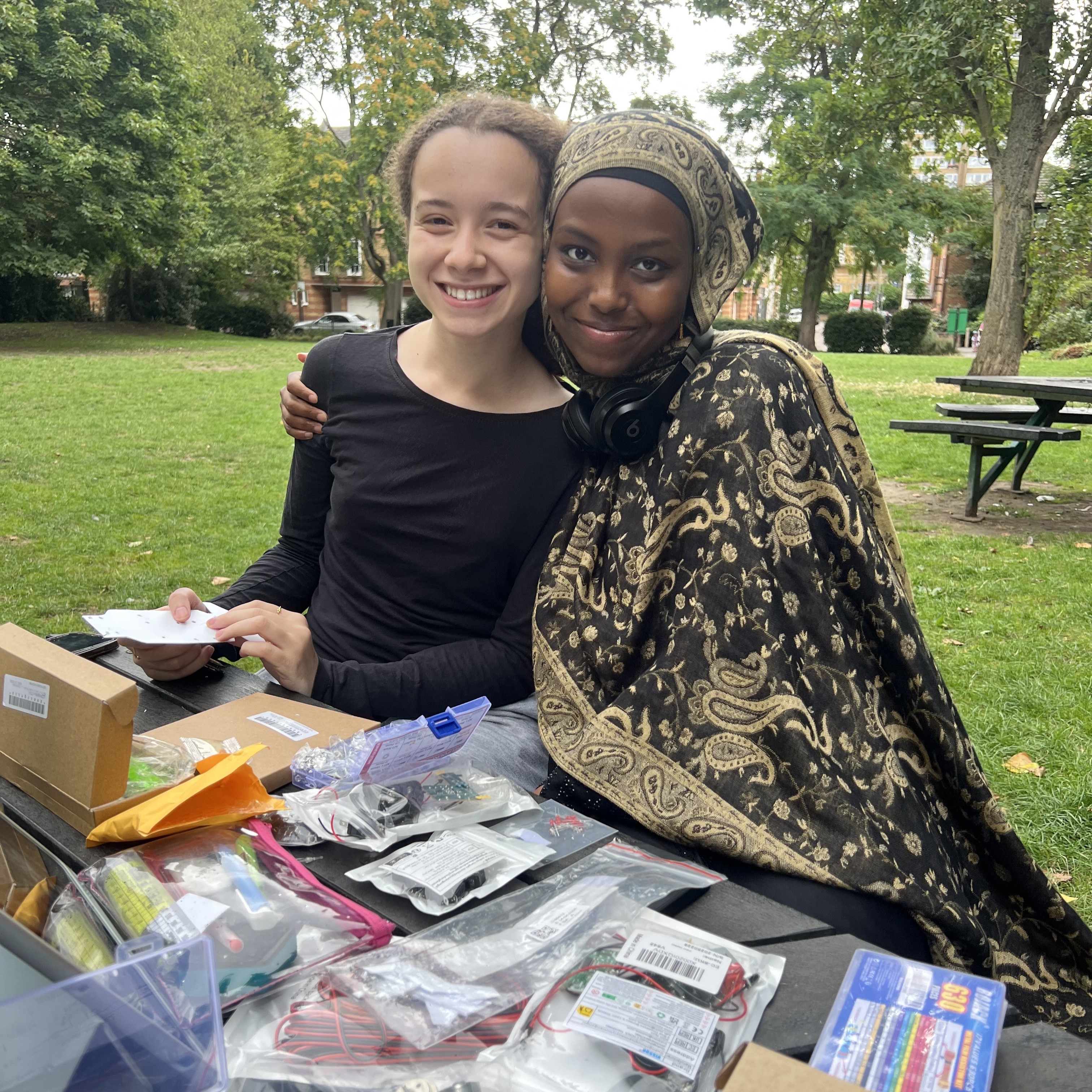
Their story, in their words…
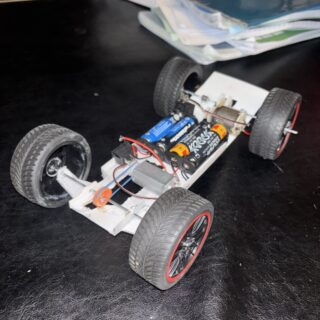
Firstly, we had found blueprints and diagrams of the parts and circuitry of the car; for the base and body of the car we printed the blueprints, glued it on PVC and cut it out to scale. We also redrew the circuit diagrams to better work for the car, yet we couldn’t put it into the car unless the body was complete. Using a knife and scissors we were able to get all the pieces and assemble using a soldering iron and screws.
The main problem after assembling the car was that the motor was too weak to support the weight of the wheels and wouldn’t run which proved difficult as we had already attached the bike spoke to the wheels and would be very difficult to remove or cut a new one to size especially as we didn’t have a stronger motor or lighter wheels. This meant that the switch wasn’t able to turn off both motors which made this more difficult and complicated.
Thankfully we were able to fix this by adding a separate battery pack to power the motors separately which meant that they were able to work regardless of the weight of the wheels.
Despite the project seeming difficult as none of us had all the circuit, building, and planning skills we were able to take away improvising and moving on from the problems in the parts allowing us to successfully make the car work.