Their story, in their words…
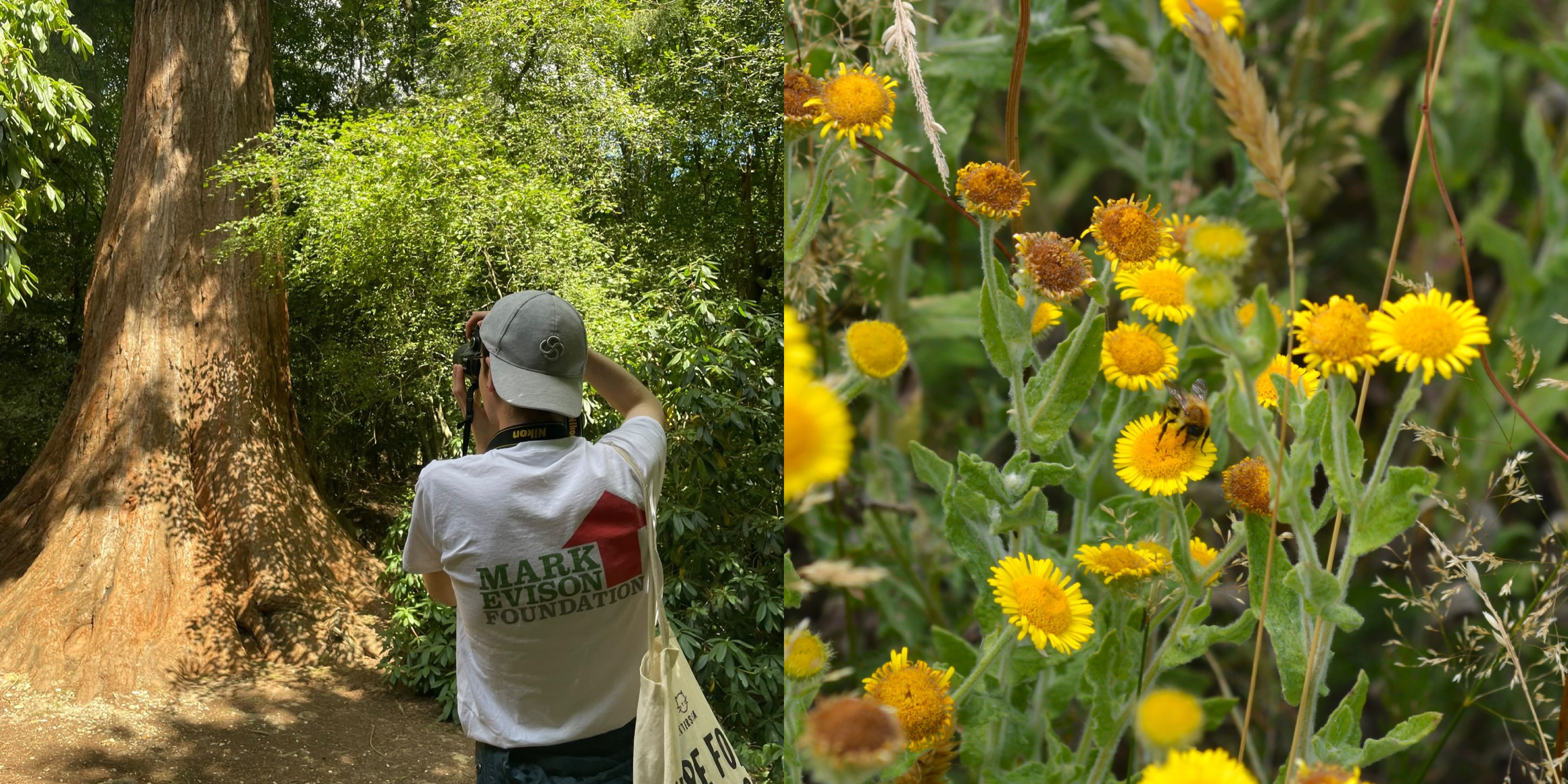
With our funding, we aimed to investigate biodiversity around the Leith Hill National Trust park and the variation of diversity in open areas in comparison to woodland spaces; especially considering the droughts we experienced this year. Our hypothesis, therefore, was that the woodland areas will have higher biodiversity due to the lower temperature, less sun exposure, and higher moisture levels in contrast to exposed areas. Additionally, we wanted to create a short documentary of our research methods and an overview of our trip as a whole.
Day 1. After a 50 minute train journey from Clapham Junction to Dorking, we set off to walk to the Etherley Farm campsite. We walked for around 4 hours in the highest temperatures of the day until we finally reached the campsite, exhausted, at 5pm. We set up our tents and made dinner, before planning our next day.
Day 2. We walked for 25 minutes to Etherley Copse where we began our first biodiversity research. Here, we investigated Dingwall Wood diversity- utilising our quadrats in a 10m x 10m area and random selection of coordinates- compared with the open fields of Etherley Copse. We found a clear decrease in diversity in the open space in comparison to the woodland- supporting our hypothesis that the drought negatively impacted diversity.
Day 3. This was our longest day out where we walked for 45 minutes up to Leith Hill. Firstly, we studied the wooded areas of Leith Hill that had significantly higher tree coverage than the unshaded area by Leith Hill Tower. Again, we found higher biodiversity in the woodland than open space. After lunch, we began our transect research which consisted of placing quadrats at every metre from the base of a tree to open space away from it. This showed the gradual difference in diversity from the cover of a tree to the exposed space 10 metres away. Here, we saw a significant decline in diversity as we moved away from the base of the trees.
Day 4. Lastly, we looked into the difference between exposed and shaded areas at Leith Hill Place. Similarly to previous days, results supported our hypothesis.
Day 5. Finally on our last day, we walked for 4 hours back to Dorking station where we began our journey home. From here, we started to edit our documentary.
Thank you so much to Mark Evison Foundation for this extraordinary and educational opportunity! We have both found this trip incredibly beneficial for our confidence in creating our own biology research projects, and for our resilience!