Their story, in their words…
We decided to launch from Bushy Park in South Wimbledon, as the crosswinds were relatively calm and it was the most cost effective park to travel to, whilst being in a safe area surrounded by golf courses and open fields.
A lot of our movement was restricted by the immense weight of the helium tank, meaning our choices were restricted to parks nearby stations, in order for us to minimise walking.
After launching the balloon, we tracked It’s flight path and spent around 5 hours travelling and walking to retrieve it, due to faults in the gps we were not aware of.
Unfortunately, due to the extremely low temperatures at the high altitudes messing with the camera, some of the photos may not be HD, but still show the curvature of the earth.
On the 31st of July 2024 at 18:12, the payload had seemingly vanished in a wheat field, as the scorching sun bore down on us while we searched frantically for it. But let’s rewind to understand how we ended up in this predicament.
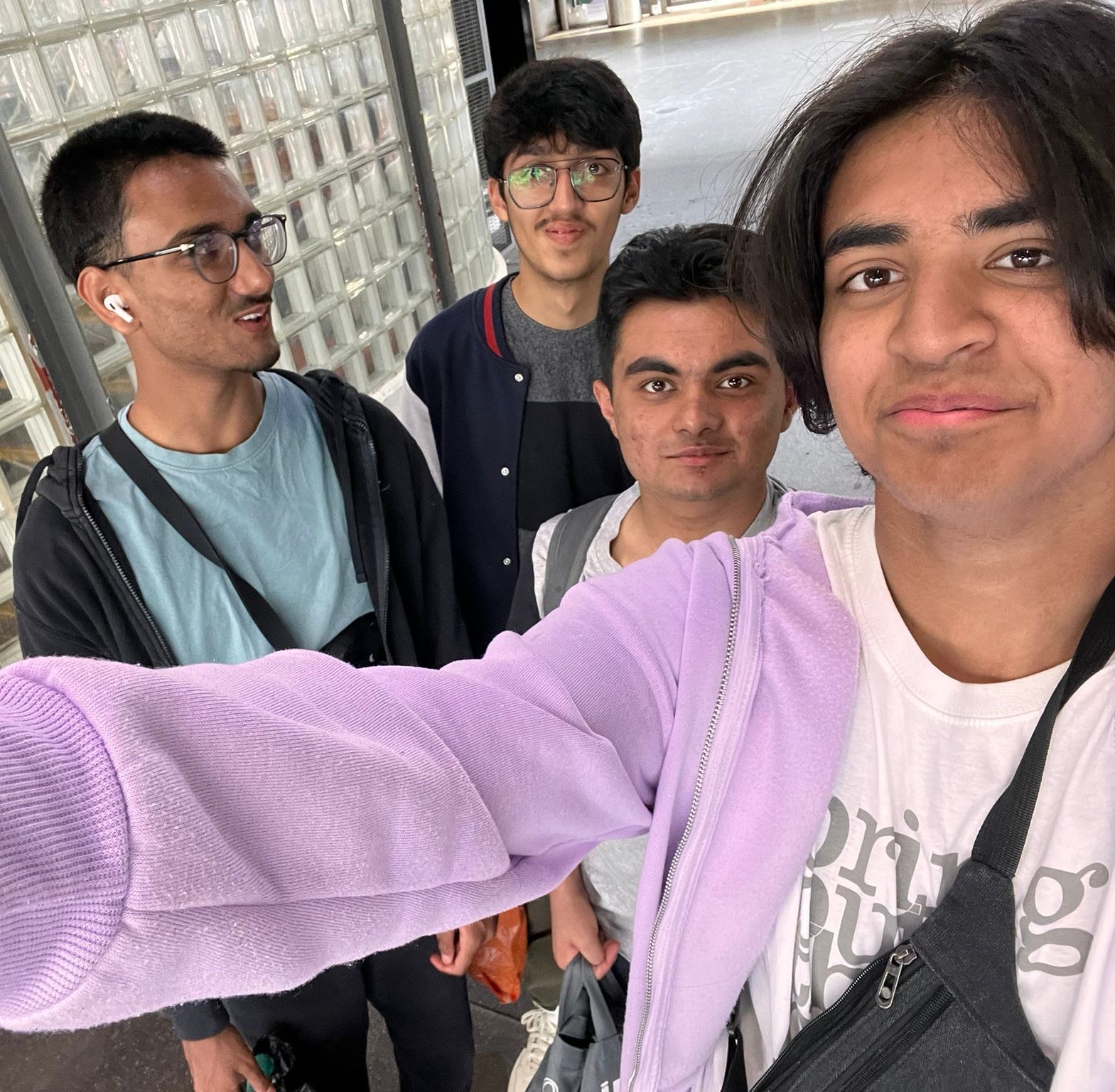
In early 2024, the Mark Evison Foundation visited our school, offering us a chance to create and complete a project before Year 13. My group, consisting of Kartheek Kondate, Viraj Naker, Rohan Patel, and Rudra Prajapati, decided to embark on a unique challenge: sending food to near space with a GoPro to capture the footage. We wanted to see what space conditions would do to the food, and then—perhaps somewhat crazily—eat it ourselves.
Planning this project was no easy task. We faced the challenge of purchasing the necessary equipment while staying within our budget, and we had to make sure the payload was as light as possible. We spent months researching and finally, by June, we were ready to assemble the components and activate the GoPro and GPS.
The last crucial step was buying the weather balloon. However, finding a reliable source for helium was a nightmare; prices were sky-high, and it cost us around £250 just for the helium canister.
Even after securing the helium, we had to reschedule the launch several times, despite receiving CAA approval, which allowed us a one-week window to launch. Initially, we planned to launch on the 26th of July, but due to unfavorable weather conditions, we had to push it back. Finally, on the 31st of July, everything was set.
We decided to launch in Reading, as it was easily accessible via the Elizabeth Line. On the day of the launch, we arrived at a park near the train station, nervous but excited.
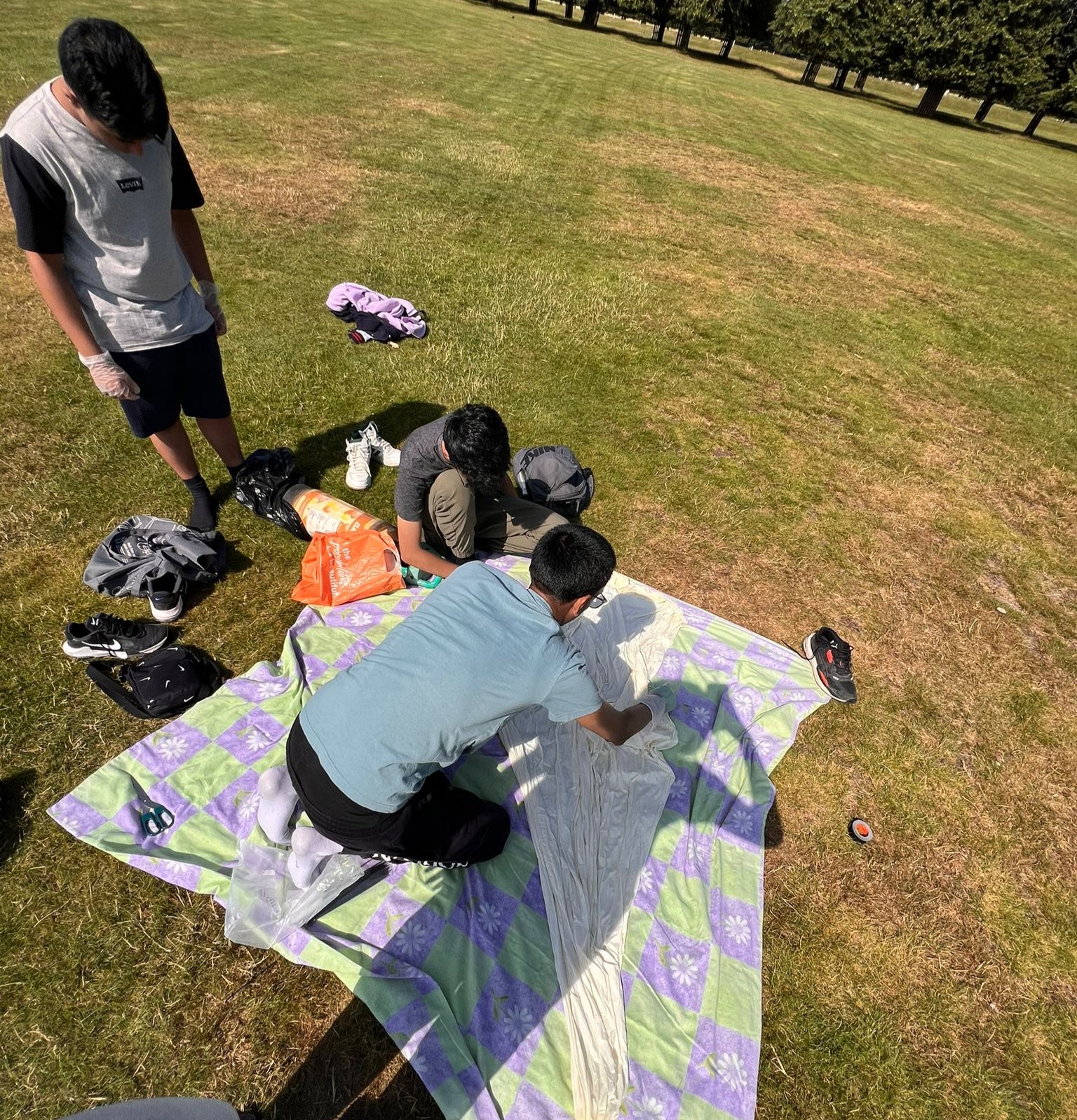
We laid out a bedsheet on the ground, carefully set up the balloon, and attached the payload and parachute. The helium canister didn’t come with a nozzle, making it extremely difficult to fill the balloon without worrying that it might burst.
Once the balloon was filled and secured with zip ties, we attached the payload, switched on the camera and GPS, and tested everything to make sure it was working. Satisfied, we let the balloon go and watched it ascend into the sky. According to our predictor, it was heading towards central London.
Three hours later, we were puzzled. The balloon had stopped transmitting data, and it seemed to have landed much sooner than expected. We contacted the GPS company, and they informed us that the balloon had actually landed just 45 minutes after launch—far earlier than the three hours we had anticipated. Shocked and disappointed, we drove back to the launch site but couldn’t find the payload.
The next day, we noticed the GPS signal had started moving again. Two of our team members returned to the site, where they discovered that the balloon had landed on a golf course. Some players had picked it up mid-game and handed it to the golf club staff, who hadn’t realized what they had.
Two days after the launch, we finally retrieved the payload. The GoPro footage was breathtaking, showing the balloon’s journey to near space. As for the food, it was noticeably chewier, colder, and harder in the core—definitely an interesting result. We were thrilled with what we had achieved and incredibly grateful to the Mark Evison Foundation for making this adventure possible. A huge thank you to them for giving us this unforgettable experience!
The balloon reached an estimated 40 km in altitude before bursting and hitting the ground.
The marshmallows inside the container expanded in diameter sizeably, with some of them expanding by 1.5x, and the maltesers hardened, with some of them partially losing their chocolate coating.
The container and parachute eventually landed on a golf course in South Wimbledon, where 3 kind men picked it up and gave it to the rangers to store until we arrived.